Wearable Health Tech 2025: Driving Better Lifestyle Choices
The latest wearable health tech in 2025 is revolutionizing personal well-being by providing real-time data and actionable insights that empower Americans to proactively manage their physical and mental health, fostering healthier lifestyle choices.
The landscape of personal health management is continually evolving, and in 2025, wearable health tech has emerged as an indispensable ally for Americans seeking to optimize their well-being. These smart devices, once considered futuristic gadgets, are now integral tools, offering unprecedented insights into our bodies and minds, thereby empowering us to make more informed and healthier lifestyle choices.
The evolution of wearable health technology
Wearable health technology has come a long way from simple step counters. Today’s devices are sophisticated bio-sensors, capable of capturing a vast array of physiological data with impressive accuracy. This evolution is driven by advancements in miniaturization, battery life, and artificial intelligence, making these tools more powerful and user-friendly than ever before.
Early iterations focused primarily on fitness tracking, counting steps, and estimating calories burned. While valuable, these early devices offered limited insights into overall health. The current generation, however, provides a holistic view, integrating various metrics to paint a comprehensive picture of an individual’s health status.
From basic tracking to advanced diagnostics
- Continuous Glucose Monitoring (CGM): Devices now offer non-invasive or minimally invasive CGM, crucial for managing diabetes and understanding metabolic responses to diet.
- Advanced Sleep Analysis: Beyond tracking sleep duration, modern wearables can differentiate sleep stages, detect sleep disturbances like apnea, and offer personalized recommendations for better rest.
- Stress and Mental Health Monitoring: New sensors and algorithms can identify physiological markers of stress, providing prompts for mindfulness exercises or suggesting breaks.
The integration of these advanced diagnostic capabilities transforms wearables from mere trackers into proactive health management systems. They provide individuals with the data needed to understand their bodies better and make timely adjustments to their routines. This shift empowers users to move beyond reactive health care and embrace a more preventive approach.
Ultimately, the continuous development in wearable health tech indicates a future where personal health data is not just collected but actively interpreted to guide individuals toward optimal health outcomes. This ongoing innovation promises even more sophisticated and integrated health solutions in the years to come, further embedding these devices into daily life.
Personalized insights for better lifestyle choices
One of the most significant impacts of modern wearable health tech is its ability to provide personalized insights. Generic health advice often falls short because every individual’s body and lifestyle are unique. Wearables bridge this gap by gathering data specific to the user, offering tailored recommendations that are far more effective.
These devices analyze patterns in activity, sleep, heart rate variability, and even environmental factors to create a detailed profile of an individual’s health. This personalized data can highlight areas for improvement that might otherwise go unnoticed, such as subtle changes in sleep quality or consistent spikes in stress levels.
Tailored recommendations for daily habits
- Exercise Optimization: Based on fitness levels and recovery, wearables suggest optimal workout intensities and durations, preventing overtraining or under-exertion.
- Nutrition Guidance: Some devices, when paired with apps, can correlate food intake with energy levels and sleep quality, helping users identify beneficial or detrimental dietary patterns.
- Mindfulness Prompts: Detecting rising stress, wearables can suggest short breathing exercises or guided meditations, fostering better emotional regulation throughout the day.
The power of these personalized insights lies in their actionable nature. Instead of just presenting raw data, the accompanying apps and platforms translate complex information into simple, understandable advice. This makes it easier for users to implement changes, leading to sustainable improvements in their daily routines. The goal is not just to track, but to guide.
By offering customized feedback, wearable health tech helps individuals understand the direct impact of their choices on their overall well-being. This understanding fosters a stronger sense of self-awareness and accountability, crucial elements for making lasting positive changes to one’s lifestyle.
Enhancing physical fitness and activity levels
For many Americans, increasing physical activity is a primary health goal, and wearable health tech has proven to be an invaluable tool in achieving this. These devices provide constant motivation, track progress, and offer feedback that can transform sedentary routines into active lifestyles. They make fitness accessible and engaging, regardless of an individual’s starting point.
Beyond simply counting steps, modern wearables offer sophisticated metrics such as VO2 max, running dynamics, and recovery times. This level of detail allows users to train smarter, avoid injuries, and optimize their performance, whether they are elite athletes or just beginning their fitness journey.
Motivation and goal setting
- Activity Rings/Goals: Visual progress trackers encourage users to complete daily activity targets, creating a sense of achievement and consistency.
- Challenge Features: Many platforms offer challenges or competitions with friends, adding a social and competitive element to staying active.
- Performance Metrics: Detailed data on pace, distance, elevation, and heart rate zones helps users understand and improve their performance over time.
The immediate feedback provided by wearables is a powerful motivator. Seeing real-time heart rate during a workout or receiving a notification to stand up and move after a period of inactivity can significantly influence behavior. This constant interaction reinforces positive habits and makes it easier to adhere to fitness goals.
Furthermore, the ability to track long-term trends allows users to see their progress over weeks and months, which is incredibly encouraging. This data-driven approach to fitness eliminates guesswork and provides tangible evidence of effort, driving sustained engagement with physical activity.
The impact on mental well-being and stress management
While often associated with physical health, wearable tech is increasingly making significant contributions to mental well-being and stress management. The connection between physical and mental health is undeniable, and these devices are providing new ways to monitor and support emotional balance. They offer tools to help individuals recognize stress triggers and develop coping mechanisms.
Many modern wearables incorporate features that monitor physiological indicators of stress, such as heart rate variability (HRV) and skin conductance. When these metrics suggest elevated stress, the devices can prompt users to engage in calming activities, effectively intervening before stress becomes overwhelming.
Tools for emotional regulation
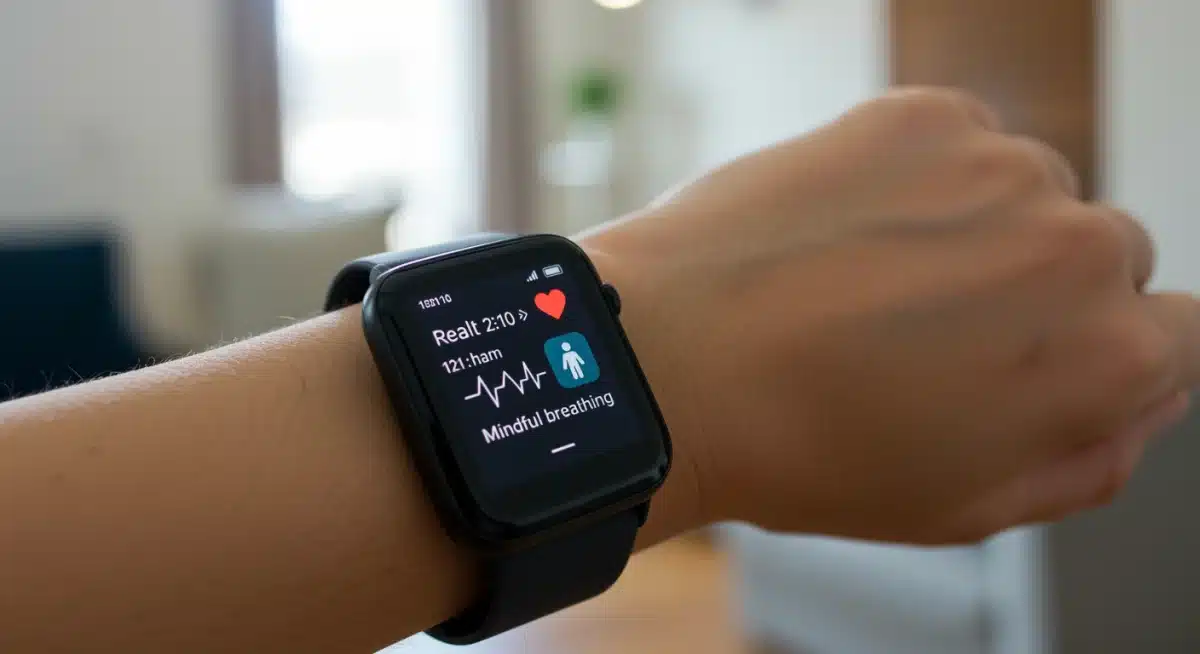
- Guided Breathing Exercises: On-device prompts guide users through simple breathing techniques to reduce immediate stress and anxiety.
- Mindfulness Reminders: Integration with meditation apps allows for timely suggestions to pause and practice mindfulness throughout the day.
- Sleep Quality Insights: Better sleep, often influenced by mental state, is tracked and analyzed, with recommendations to improve restorative rest, directly impacting mood and cognitive function.
The ability of wearables to provide objective data on stress levels can be incredibly validating. Users might feel stressed but struggle to quantify it; the data offers concrete evidence, encouraging them to take action. This objective feedback fosters a greater understanding of one’s own emotional patterns and responses.
Moreover, by integrating with mental health applications and offering tailored interventions, these devices are becoming proactive partners in managing daily stressors. They empower individuals to build resilience and maintain emotional equilibrium, contributing significantly to overall quality of life.
Integration with healthcare and remote monitoring
The future of healthcare is undeniably moving towards more integrated and remote solutions, and wearable health tech is at the forefront of this transformation. These devices are not only empowering individuals but also providing healthcare professionals with valuable continuous data that can lead to more personalized and preventive care models. This integration represents a significant shift from episodic care to ongoing health management.
Remote patient monitoring (RPM) is a rapidly growing field, and wearables are its primary enablers. For individuals with chronic conditions like heart disease, diabetes, or hypertension, continuous monitoring can provide early warnings of potential issues, allowing for timely intervention and reducing the need for emergency care.
Benefits for patients and providers
- Early Detection: Constant monitoring of vital signs can detect subtle changes that might indicate the onset of a health issue, often before symptoms become severe.
- Medication Adherence: Some wearables can integrate with smart pill dispensers or provide reminders, improving patient compliance with prescribed treatments.
- Reduced Hospitalizations: Proactive management and early intervention, facilitated by remote data, can significantly decrease hospital visits and readmissions.
For healthcare providers, the stream of real-time data from wearables offers a more complete picture of a patient’s health outside of clinic visits. This data can inform treatment plans, track the effectiveness of interventions, and enable more precise adjustments to care. It also fosters a more collaborative relationship between patients and their doctors.
However, challenges remain in ensuring data security, interoperability between different devices and electronic health records, and establishing clear guidelines for data interpretation. Despite these hurdles, the potential for wearables to revolutionize healthcare delivery and outcomes is immense, promising a more efficient and patient-centered system.
Challenges and the path forward for wearable tech
Despite the immense promise and current capabilities of wearable health tech, the industry faces several challenges that need to be addressed for widespread adoption and maximum impact. These obstacles range from technical limitations to ethical considerations, all of which are crucial for the sustainable growth and trustworthiness of these devices.
One primary concern is data accuracy and reliability. While many devices offer impressive precision, variations exist, and users need to be confident that the data they are relying on is consistently accurate. Another challenge is battery life; continuous monitoring often drains batteries quickly, requiring frequent recharging which can be inconvenient for users.
Addressing key concerns
- Data Privacy and Security: Ensuring that sensitive health data is protected from breaches and used ethically is paramount to building user trust.
- Interoperability: Creating seamless integration between different wearable brands, health platforms, and electronic health records is crucial for a unified health ecosystem.
- User Engagement: Beyond the initial novelty, maintaining long-term user engagement requires intuitive interfaces, meaningful insights, and continuous innovation.
The path forward involves collaborative efforts between tech companies, healthcare providers, regulatory bodies, and users. Standardized protocols for data collection and sharing, robust security measures, and clear regulatory frameworks are essential. Furthermore, educating users on how to interpret and act on their data responsibly will be key.
Innovation in sensor technology, energy efficiency, and artificial intelligence will continue to drive improvements. As these challenges are met, wearable health tech will become even more indispensable, solidifying its role as a cornerstone of preventive health and personalized well-being for Americans.
| Key Aspect | Brief Description |
|---|---|
| Advanced Monitoring | Wearables now offer sophisticated tracking of diverse metrics like sleep stages, stress, and continuous glucose. |
| Personalized Insights | Devices provide tailored recommendations for exercise, nutrition, and mindfulness based on individual data. |
| Mental Well-being Support | Stress detection and guided exercises help users manage emotional health proactively. |
| Healthcare Integration | Enabling remote patient monitoring and providing continuous data for better clinical decision-making. |
Frequently asked questions about wearable health tech
The primary benefit is empowering individuals with personalized, real-time insights into their physical and mental health. This data allows Americans to make informed decisions, proactively manage their well-being, and adopt healthier lifestyle choices, moving towards preventive care rather than reactive treatments.
Wearables support mental well-being by monitoring physiological indicators of stress, such as heart rate variability. They can then prompt users with guided breathing exercises or mindfulness reminders, helping to mitigate stress in real-time and fostering better emotional regulation throughout the day.
In 2025, continuous glucose monitors (CGM) are increasingly accurate and accessible, including non-invasive or minimally invasive options. They are crucial for diabetes management and understanding metabolic responses, offering real-time data that aids in dietary and lifestyle adjustments for better health outcomes.
Key challenges include ensuring consistent data accuracy and reliability, improving battery life for continuous use, and addressing critical concerns around data privacy and security. Establishing interoperability between different devices and healthcare systems is also vital for seamless integration and widespread adoption.
Wearable tech is integrating with traditional healthcare through remote patient monitoring, providing doctors with continuous data on vital signs and activity levels. This enables early detection of issues, more personalized treatment plans, and can help reduce hospitalizations, shifting care towards a more preventive and patient-centered model.
Conclusion
The landscape of health and wellness for Americans in 2025 is undeniably shaped by the advancements in wearable health tech. These devices have evolved far beyond simple fitness trackers, offering sophisticated monitoring, personalized insights, and proactive guidance that empower individuals to take charge of their well-being. From optimizing physical activity and sleep to managing stress and integrating with remote healthcare, wearables are proving to be indispensable tools. While challenges such as data privacy and interoperability persist, ongoing innovation and collaborative efforts are paving the way for an even more integrated and impactful future where these technologies will continue to drive better lifestyle choices and foster a healthier nation.