Maximizing Insurance Benefits: 2025 Addiction Treatment Coverage

Maximizing insurance benefits for addiction treatment in 2025 involves understanding policy specifics, navigating financial impacts, and leveraging practical solutions to ensure access to necessary recovery services without undue financial burden.
Navigating the complexities of healthcare insurance for addiction treatment can feel overwhelming, especially when seeking critical support for recovery. This 2025 guide aims to simplify the process, helping you understand and maximize your addiction treatment insurance benefits. We will explore the financial aspects, highlight practical solutions, and empower you to make informed decisions for yourself or your loved ones.
Understanding Your Insurance Policy: The Foundation of Coverage
Before embarking on the journey of addiction treatment, a thorough understanding of your insurance policy is paramount. Policies vary significantly, not just between providers but also within different plans offered by the same insurer. Knowing the specifics can save you time, stress, and substantial financial outlay.
Many individuals are unaware of the nuances of their health insurance, especially concerning mental health and substance use disorder (SUD) coverage. The Mental Health Parity and Addiction Equity Act (MHPAEA) of 2008 mandates that insurers provide mental health and SUD benefits at parity with medical and surgical benefits. This means that if your plan covers physical health issues, it must cover mental health and addiction treatment equally.
Key Terms to Know in Your Policy
Understanding the terminology used in your insurance policy is the first step toward effective navigation. These terms directly impact your out-of-pocket costs and the types of services you can access.
- Deductible: The amount you must pay out of pocket before your insurance company starts paying for covered services.
- Copayment (Copay): A fixed amount you pay for a covered healthcare service after you’ve paid your deductible.
- Coinsurance: Your share of the cost for a covered healthcare service, calculated as a percentage of the allowed amount for the service.
- Out-of-Pocket Maximum: The most you have to pay for covered services in a plan year. Once you reach this amount, your insurance plan pays 100% of the cost of covered benefits.
Each of these components plays a critical role in the overall financial impact of addiction treatment. It is essential to review your policy documents or contact your insurer directly to clarify these figures for your specific plan.
In conclusion, a deep dive into your insurance policy’s details is not just a recommendation but a necessity. Familiarize yourself with key terms and understand how they apply to mental health and SUD treatment to build a solid foundation for your recovery journey.
Navigating Different Types of Addiction Treatment Coverage
Addiction treatment encompasses a spectrum of services, each with varying levels of intensity and duration. Your insurance coverage will likely differ based on the type of treatment program you choose or that is recommended for you. Understanding these distinctions is crucial for effective planning.
The landscape of addiction treatment includes inpatient, outpatient, partial hospitalization, and intensive outpatient programs. Each offers a unique approach to recovery, catering to different needs and stages of addiction. Insurance providers categorize and cover these services distinctly, often requiring pre-authorization or specific criteria to be met.
Inpatient vs. Outpatient Coverage
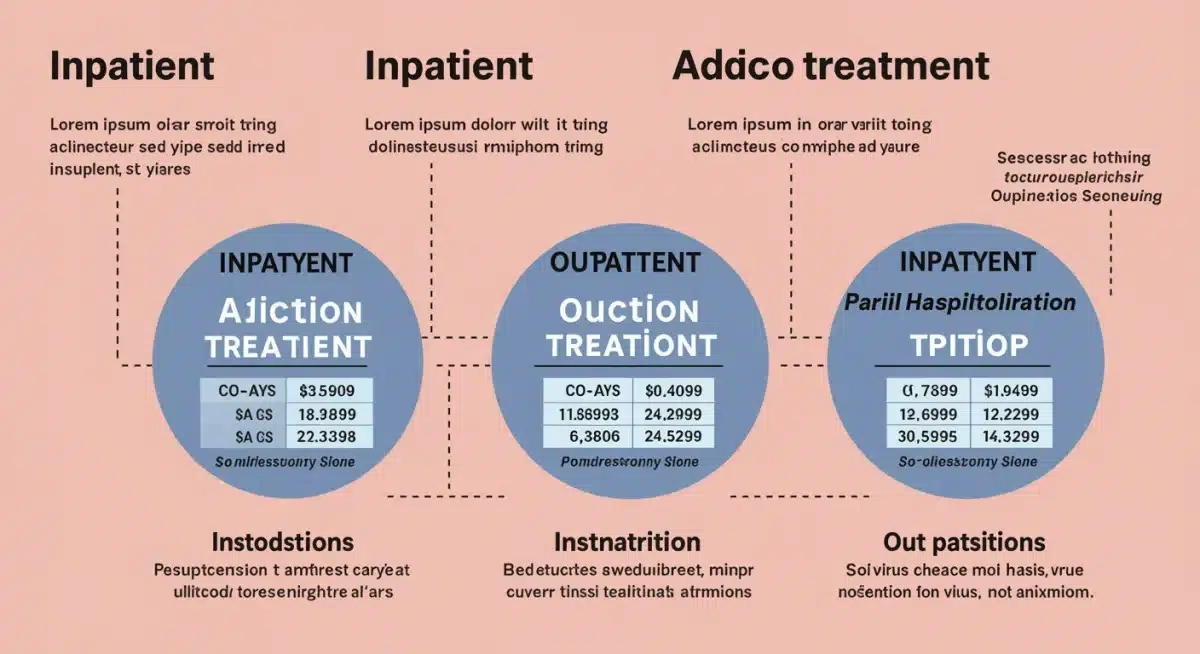
Inpatient treatment, often referred to as residential treatment, involves staying at a facility 24/7 for a period, typically 30, 60, or 90 days. This provides an immersive and structured environment conducive to recovery. Outpatient treatment, conversely, allows individuals to live at home while attending therapy sessions and group meetings at a facility during the day or evening.
Insurance coverage for inpatient programs tends to be more complex due to the higher costs associated with round-the-clock care. Many policies require a medical necessity review to approve inpatient stays, ensuring that the level of care is appropriate for the individual’s condition. Outpatient programs, while generally less expensive, also have specific coverage parameters, including limits on the number of sessions or types of therapy covered.
Partial Hospitalization Programs (PHPs) and Intensive Outpatient Programs (IOPs) offer a middle ground, providing structured treatment during the day with the flexibility of returning home at night. These programs are often covered similarly to outpatient services but may require more frequent attendance and a higher level of clinical oversight.
To summarize, the type of addiction treatment significantly influences insurance coverage. It’s imperative to verify with your insurance provider which specific programs are covered and under what conditions, to align treatment plans with your financial realities.
Pre-Authorization and Medical Necessity: Essential Steps for Coverage
One of the most critical aspects of securing insurance coverage for addiction treatment is navigating the pre-authorization process and demonstrating medical necessity. These steps are often required by insurers before they will agree to cover significant treatment costs, particularly for inpatient or long-term programs.
Pre-authorization, also known as prior authorization, is a process where your healthcare provider must obtain approval from your health insurance plan before you receive certain services or medications. This is not a guarantee of payment but rather an acknowledgment that the proposed treatment meets the insurer’s criteria for coverage.
The Role of Medical Necessity
Medical necessity refers to whether a healthcare service or treatment is considered reasonable and necessary to diagnose or treat an illness or injury. For addiction treatment, this means demonstrating that the chosen program or service is appropriate for your specific condition and is expected to improve your health outcomes.
Insurance companies typically have their own criteria for determining medical necessity, which may include factors such as the severity of addiction, co-occurring mental health disorders, previous treatment history, and the risk of relapse. Your healthcare provider will usually handle the submission of documentation to support medical necessity, but it is wise to be informed about the process.
Failure to obtain pre-authorization or to adequately demonstrate medical necessity can result in significant financial liability, as your insurance company may deny coverage for the services rendered. It’s a proactive step that can prevent unexpected bills and ensure your treatment is covered as expected.
In conclusion, understanding and actively participating in the pre-authorization and medical necessity processes are non-negotiable for maximizing your addiction treatment insurance benefits. Always confirm these requirements with your provider and insurer before beginning treatment.
Financial Impact and Practical Solutions for 2025
Even with insurance, the financial impact of addiction treatment can be substantial. Deductibles, copayments, and coinsurance can quickly accumulate, leading to unexpected out-of-pocket expenses. However, several practical solutions exist to mitigate these costs in 2025.
The rising cost of healthcare, coupled with the complexities of insurance plans, necessitates a proactive approach to financial planning for addiction recovery. Understanding your financial obligations upfront and exploring all available options can significantly reduce the burden.
Strategies to Reduce Out-of-Pocket Costs
Several strategies can help manage the financial aspect of addiction treatment. These solutions range from utilizing in-network providers to exploring financial assistance programs. Many treatment centers offer payment plans or sliding scale fees based on income.
- In-Network Providers: Always prioritize treatment centers and providers that are in-network with your insurance plan. This ensures you receive the highest level of coverage and avoid unexpected out-of-network charges.
- Payment Plans: Many treatment facilities understand the financial strain of recovery and offer flexible payment plans to help manage costs. Do not hesitate to inquire about these options.
- Financial Assistance Programs: Look into state-funded programs, grants, or non-profit organizations that offer financial aid for addiction treatment. These resources can provide crucial support.
- Health Savings Accounts (HSAs) and Flexible Spending Accounts (FSAs): If you have an HSA or FSA, these accounts allow you to set aside pre-tax money for healthcare expenses, including addiction treatment.
Furthermore, consider discussing your financial situation openly with the admissions team at prospective treatment centers. They often have experience navigating insurance and can offer guidance on maximizing benefits and exploring alternative funding sources.
Ultimately, while addiction treatment can be costly, numerous practical solutions exist to help alleviate the financial burden. Being informed and proactive about these options can make a significant difference in accessing the care you need.
Advocacy and Appeals: What to Do When Coverage is Denied
Despite careful planning and understanding your policy, there may be instances where insurance coverage for addiction treatment is partially or fully denied. This can be disheartening, but it is not necessarily the final word. Knowing how to advocate for yourself and navigate the appeals process is crucial.
Insurance companies sometimes deny coverage based on their interpretation of medical necessity, administrative errors, or policy exclusions. It’s important to remember that you have the right to appeal these decisions and fight for the coverage you believe you are entitled to.
The Insurance Appeals Process
The appeals process typically involves several stages, starting with an internal appeal to your insurance company. If that is unsuccessful, you can often pursue an external review.
- Internal Appeal: This is your first step. You (or your provider on your behalf) submit a formal request to your insurance company to reconsider their decision. This usually involves providing additional medical documentation, letters of support from healthcare professionals, and a clear explanation of why the treatment is medically necessary.
- External Review: If your internal appeal is denied, you have the right to an external review. An independent third party, not affiliated with your insurance company, will review your case and make a decision. This decision is often binding for the insurer.
- State Insurance Department: Your state’s Department of Insurance or equivalent regulatory body can also provide assistance and information regarding your rights and the appeals process. They may intervene on your behalf or offer guidance.
Throughout this process, meticulous record-keeping is vital. Document every phone call, save all correspondence, and keep copies of all submitted forms and medical records. This documentation will be invaluable if you need to escalate your appeal.
In summary, a denial of coverage is not always the end of the road. By understanding your rights, meticulously documenting your case, and diligently pursuing the appeals process, you can significantly increase your chances of securing the necessary insurance coverage for addiction treatment.
The Role of the Affordable Care Act (ACA) in 2025 Coverage
The Affordable Care Act (ACA) has significantly reshaped the landscape of addiction treatment insurance coverage, guaranteeing access to essential health benefits, including mental health and substance use disorder services. Understanding the ACA’s provisions is key to maximizing your benefits in 2025.
Prior to the ACA, many insurance plans excluded or heavily limited coverage for addiction treatment, often treating it differently from other medical conditions. The ACA aimed to rectify this disparity, ensuring that more Americans have access to comprehensive care.
ACA’s Impact on Addiction Treatment
The ACA designates mental health and substance use disorder services as one of the ten essential health benefits that most insurance plans must cover. This mandate applies to plans sold on the Health Insurance Marketplace, Medicaid expansion programs, and most small employer plans.
- Essential Health Benefits (EHBs): Addiction treatment falls under EHBs, meaning plans must cover it.
- No Pre-existing Condition Exclusions: Insurers cannot deny coverage or charge more due to a pre-existing condition, including substance use disorders.
- Parity Requirements: The ACA reinforces the MHPAEA, ensuring that financial requirements (like deductibles and copays) and treatment limitations for mental health and SUD services are no more restrictive than those for medical and surgical benefits.
Furthermore, the ACA expanded Medicaid eligibility in many states, providing a pathway to coverage for millions of low-income Americans who previously lacked access to affordable healthcare, including addiction treatment. This expansion has been a lifeline for many seeking recovery.
It’s important to note that while the ACA provides a strong framework, the specifics of coverage can still vary by plan and state. Always verify your plan’s details and how the ACA’s provisions apply to your individual circumstances.
In conclusion, the ACA remains a cornerstone of addiction treatment coverage in 2025, offering vital protections and ensuring access to essential services. Leveraging its provisions can significantly enhance your ability to secure comprehensive care.
Seeking Professional Guidance: When to Get Help
While this guide provides a comprehensive overview, navigating insurance benefits for addiction treatment can still be complex. There are times when seeking professional guidance from experts can be invaluable, ensuring you make the most informed decisions and avoid potential pitfalls.
The intricacies of insurance policies, coupled with the emotional stress of seeking treatment, often make it difficult for individuals and families to manage the process effectively on their own. Professional assistance can streamline the process and advocate on your behalf.
Who Can Help You Navigate Your Benefits?
Several types of professionals and organizations specialize in helping individuals understand and utilize their addiction treatment insurance benefits:
- Treatment Center Admissions Teams: Most reputable addiction treatment centers have dedicated admissions staff who are experts in insurance verification and can help you understand your specific coverage. They often work directly with insurance companies to secure pre-authorizations.
- Addiction Navigators or Advocates: These professionals specialize in guiding individuals through the entire recovery process, including insurance navigation, treatment placement, and ongoing support.
- Financial Counselors: Some treatment centers or independent services offer financial counseling to help you understand costs, explore payment options, and plan for your financial obligations.
- Employee Assistance Programs (EAPs): If you are employed, your EAP may offer confidential counseling and referral services, including assistance with understanding your insurance benefits for addiction treatment.
These experts can help you decode your policy, appeal denials, find in-network providers, and identify additional financial resources. Their experience can be a significant asset in reducing stress and ensuring access to timely and appropriate care.
In summary, don’t hesitate to seek professional guidance when navigating addiction treatment insurance. The expertise of admissions teams, navigators, and financial counselors can significantly ease the process and help you maximize your benefits for a successful recovery journey.
| Key Aspect | Brief Description |
|---|---|
| Policy Understanding | Familiarize yourself with deductibles, copays, coinsurance, and out-of-pocket maximums for addiction treatment. |
| Pre-Authorization | Obtain insurer approval before treatment to ensure coverage; crucial for inpatient programs. |
| Cost Reduction | Utilize in-network providers, payment plans, HSAs, and financial aid to lower out-of-pocket expenses. |
| Appeals Process | Know your rights and steps to appeal if your insurance coverage for treatment is denied. |
Frequently Asked Questions About Addiction Treatment Coverage
The MHPAEA is a federal law requiring most health plans that offer mental health and substance use disorder benefits to provide them at parity with medical and surgical benefits. This means financial requirements and treatment limitations for SUDs should be no more restrictive than for other health conditions.
Most health plans, especially those compliant with the Affordable Care Act (ACA), are required to cover addiction treatment as an essential health benefit. However, the extent and specifics of coverage can vary significantly between plans. Always verify with your specific provider.
If your insurance denies coverage, you have the right to appeal the decision. Start with an internal appeal to your insurer, providing all necessary documentation. If denied again, you can pursue an external review with an independent third party.
Some insurance plans offer limited coverage for out-of-network providers, but typically at a lower reimbursement rate, leading to higher out-of-pocket costs for you. It is always more cost-effective to utilize in-network facilities whenever possible.
The best way to determine your specific benefits is to contact your insurance provider directly. Look for the member services phone number on your insurance card. You can also review your policy documents or contact the admissions team at a treatment center for verification assistance.
Conclusion
Successfully navigating your addiction treatment insurance options in 2025 is a crucial step towards recovery. By understanding your policy, knowing the different types of coverage, proactively addressing pre-authorization, and exploring financial solutions, you can significantly reduce the burden and gain access to the care you need. Remember, advocacy and seeking professional guidance are powerful tools in this journey. Empower yourself with knowledge and ensure that financial concerns do not become a barrier to healing and well-being.