2026 SAMHSA Recovery Grants: Your Comprehensive Application Guide

Time-Sensitive: Applying for the New 2026 SAMHSA Recovery Support Grants – Deadlines Approaching
The Substance Abuse and Mental Health Services Administration (SAMHSA) plays a pivotal role in advancing the behavioral health of the nation. For organizations dedicated to supporting individuals on their journey to recovery, the announcement of the new 2026 SAMHSA Recovery Grants presents an unparalleled opportunity. These grants are designed to bolster and expand recovery support services, offering crucial funding to initiatives that foster resilience, promote well-being, and ultimately save lives. With deadlines quickly approaching, understanding the nuances of the application process is not just beneficial, it’s absolutely critical.
In the landscape of behavioral health, the need for robust, community-based recovery support is more urgent than ever. The 2026 SAMHSA Recovery Grants aim to address this need by empowering organizations to implement innovative and evidence-based programs. Whether you’re a seasoned grant applicant or new to the process, this comprehensive guide will walk you through every essential step, from understanding the core objectives of these grants to crafting a compelling proposal that stands out. Our goal is to equip you with the knowledge and strategies necessary to navigate this competitive funding cycle successfully.
Understanding the Vision Behind the 2026 SAMHSA Recovery Grants
Before delving into the technicalities of the application, it’s crucial to grasp the overarching vision and priorities that SAMHSA has set for the 2026 SAMHSA Recovery Grants. These grants are not merely about funding; they are about investing in a future where recovery is accessible and sustainable for all. SAMHSA’s strategic plan emphasizes several key areas, including:
- Expanding Access to Care: Ensuring that individuals, especially those in underserved communities, have access to a full continuum of recovery support services.
- Promoting Health Equity: Addressing disparities in access, quality, and outcomes of behavioral health services, particularly for racial and ethnic minorities, LGBTQ+ individuals, and other marginalized populations.
- Integrating Care: Fostering collaboration between behavioral health, primary care, and other health systems to provide holistic, person-centered care.
- Strengthening the Behavioral Health Workforce: Supporting the development and retention of a skilled and diverse workforce capable of delivering high-quality recovery services.
- Utilizing Evidence-Based Practices: Encouraging the implementation of interventions and strategies that have demonstrated effectiveness in promoting recovery.
- Supporting Peer-Led Services: Recognizing the invaluable role of individuals with lived experience in supporting others on their recovery journey.
Your proposal for the SAMHSA Recovery Grants should clearly articulate how your project aligns with these foundational principles. Demonstrating a deep understanding of SAMHSA’s mission and how your program contributes to its goals will significantly strengthen your application. Think beyond just the services you offer; consider the broader impact and systemic changes your project aims to achieve.
Who Can Apply? Eligibility Criteria for SAMHSA Recovery Grants
Eligibility is the first hurdle in any grant application process. For the 2026 SAMHSA Recovery Grants, SAMHSA typically targets specific types of organizations to ensure that funding reaches those best positioned to deliver effective services. While specific criteria can vary slightly from one funding opportunity announcement (FOA) to another, general eligibility often includes:
- State and Local Governments: State mental health and substance abuse authorities, as well as county and municipal government agencies.
- Non-profit Organizations: Community-based organizations, faith-based organizations, and other non-profits with a proven track record of providing behavioral health services.
- Tribal Governments and Organizations: Federally recognized American Indian/Alaska Native (AI/AN) tribes, tribal organizations, and urban Indian organizations.
- Public and Private Hospitals: Facilities that offer behavioral health services.
- Universities and Colleges: Academic institutions involved in research, training, and direct service provision in behavioral health.
It is imperative to carefully review the specific FOA for the 2026 SAMHSA Recovery Grants once it is released. This document will contain the precise and most up-to-date eligibility requirements. Pay close attention to any exclusions or specific stipulations regarding organizational type, geographic location, or target populations. Failure to meet even one eligibility criterion can result in your application being disqualified, regardless of the quality of your proposal.
Key Components of a Winning SAMHSA Recovery Grants Proposal
A successful application for the SAMHSA Recovery Grants is a meticulously constructed document that clearly communicates your project’s vision, methodology, and anticipated impact. While each FOA will outline specific sections and requirements, most SAMHSA grant proposals share common components:
1. Executive Summary
This is your opportunity to make a powerful first impression. The executive summary should be a concise, compelling overview of your entire proposal, highlighting your organization’s mission, the problem you aim to address, your proposed solution, expected outcomes, and the total funding requested. It should be able to stand alone and convince a reviewer to read further.
2. Introduction/Organizational Capacity
Introduce your organization, its history, mission, and how it aligns with SAMHSA’s goals. Crucially, demonstrate your capacity to successfully implement the proposed project. This includes highlighting your organizational structure, key personnel (with relevant experience and qualifications), existing infrastructure, and any previous successes in similar initiatives. Strong organizational capacity is a major factor in securing SAMHSA Recovery Grants.
3. Problem Statement/Needs Assessment
Clearly articulate the specific problem or need that your project will address. Use concrete data, statistics, and qualitative evidence to illustrate the severity and scope of the issue within your target community. Explain why existing services are insufficient and how your proposed project fills a critical gap. This section should convincingly demonstrate the urgent need for your project and its relevance to the SAMHSA Recovery Grants objectives.
4. Project Narrative/Program Plan
This is the heart of your proposal. Detail your proposed project, including its goals, objectives, activities, and timeline. Be specific and measurable. Explain your chosen interventions and how they are evidence-based or innovative. Describe the target population, recruitment strategies, and how you will engage participants. Outline the roles and responsibilities of staff, and how you will ensure cultural competence and responsiveness. This section must directly address how your project will achieve the aims of the SAMHSA Recovery Grants.
5. Evaluation Plan
How will you measure success? Your evaluation plan should describe the methodology you will use to track progress towards your objectives and assess the overall impact of your project. Identify key performance indicators (KPIs), data collection methods, and how you will use evaluation findings for continuous program improvement. SAMHSA places a high value on accountability and demonstrable outcomes.
6. Budget and Justification
Provide a detailed, itemized budget that clearly outlines all anticipated costs associated with your project. Every line item must be thoroughly justified, demonstrating that the requested funds are reasonable, allocable, and necessary for project implementation. Ensure your budget aligns with your project narrative and the allowable costs stipulated in the FOA for SAMHSA Recovery Grants. Transparency and accuracy are paramount here.
7. Letters of Support/Partnerships
Include letters of support from key community partners, stakeholders, and collaborating organizations. These letters demonstrate broad community buy-in and enhance the credibility and sustainability of your project. Strong partnerships can significantly strengthen your application for SAMHSA Recovery Grants.
Strategic Tips for a Competitive SAMHSA Recovery Grants Application
Securing a SAMHSA grant is highly competitive. Beyond simply meeting the requirements, you need to make your application shine. Here are some strategic tips to enhance your proposal for the 2026 SAMHSA Recovery Grants:
- Start Early and Plan Meticulously: Grant writing is an iterative process. Do not underestimate the time required for research, writing, review, and revisions. Begin preparing as soon as the FOA is released.
- Read the FOA Thoroughly (and Multiple Times): This cannot be stressed enough. The FOA is your bible. It contains all the instructions, requirements, evaluation criteria, and specific priorities for the SAMHSA Recovery Grants. Adhere to every instruction, no matter how minor it seems.
- Align with SAMHSA’s Priorities: Your project should not only address a local need but also clearly demonstrate how it aligns with SAMHSA’s broader strategic goals for recovery and behavioral health. Use SAMHSA’s language and terminology where appropriate.
- Evidence-Based Practices are Key: SAMHSA strongly favors projects that utilize evidence-based practices (EBPs). If your project incorporates EBPs, highlight them prominently and provide citations. If you are proposing an innovative approach, explain your rationale and how you will evaluate its effectiveness.
- Demonstrate Cultural Competence and Health Equity: SAMHSA is deeply committed to health equity. Articulate how your project will effectively serve diverse populations, address health disparities, and be culturally and linguistically appropriate.
- Strong Data and Needs Assessment: Support all claims with robust data. Use local, state, and national statistics to bolster your problem statement. Show that you truly understand the needs of your target population.
- Clear, Concise, and Compelling Writing: Grant reviewers are often reviewing many applications. Make your proposal easy to read and understand. Use clear headings, bullet points, and avoid jargon where possible. Every sentence should contribute to your argument.
- Realistic and Justified Budget: Your budget should be sound, realistic, and directly support the activities outlined in your project narrative. Avoid over- or under-budgeting.
- Seek External Review: Before submission, have someone unfamiliar with your project read your entire proposal. They can identify areas of confusion, grammatical errors, or missing information. A fresh pair of eyes can be invaluable.
- Don’t Be Afraid to Ask Questions: SAMHSA typically provides contact information for program officers. If you have specific questions about the FOA or the application process, reach out well in advance of the deadline.
- Focus on Sustainability: While SAMHSA Recovery Grants provide initial funding, reviewers often look for projects with a plan for sustainability beyond the grant period. Outline how your program will continue to operate and secure funding in the long term.
Navigating the Application Portal: Grants.gov and SAMHSA
The primary platform for submitting applications for federal grants, including the SAMHSA Recovery Grants, is Grants.gov. If you haven’t already, your organization will need to be registered with Grants.gov and obtain a Unique Entity Identifier (UEI). This process can take several weeks, so it’s crucial to complete it well in advance of the application deadline.
Here’s a general overview of the steps involved:
- Obtain a UEI: Your organization must have a Unique Entity Identifier (UEI), which replaced the DUNS number. You can get this through SAM.gov.
- Register with SAM.gov: Ensure your organization is registered and actively maintained in the System for Award Management (SAM). This registration must be renewed annually.
- Register with Grants.gov: Create an organizational account on Grants.gov. This involves designating an Authorized Organization Representative (AOR) who will be responsible for submitting applications.
- Search for the FOA: Once the 2026 SAMHSA Recovery Grants FOA is released, search for it on Grants.gov using keywords or the funding opportunity number.
- Download Application Package: Download the complete application package, which includes all required forms and instructions.
- Complete Forms and Attachments: Fill out all mandatory forms and prepare your project narrative, budget, letters of support, and other attachments as specified in the FOA. Ensure all documents adhere to formatting guidelines (e.g., page limits, font size).
- Submit Application: Submit your completed application through Grants.gov. It’s highly recommended to submit well before the deadline to account for any technical issues.
- Confirmation: After submission, you should receive a confirmation email from Grants.gov. You can also track the status of your application on the portal.
Technical issues are common, especially close to deadlines. Familiarize yourself with Grants.gov tutorials and support resources. Don’t wait until the last day to submit your application for the SAMHSA Recovery Grants. A common best practice is to aim for submission at least 24-48 hours prior to the official deadline.
Post-Submission: What Happens Next?
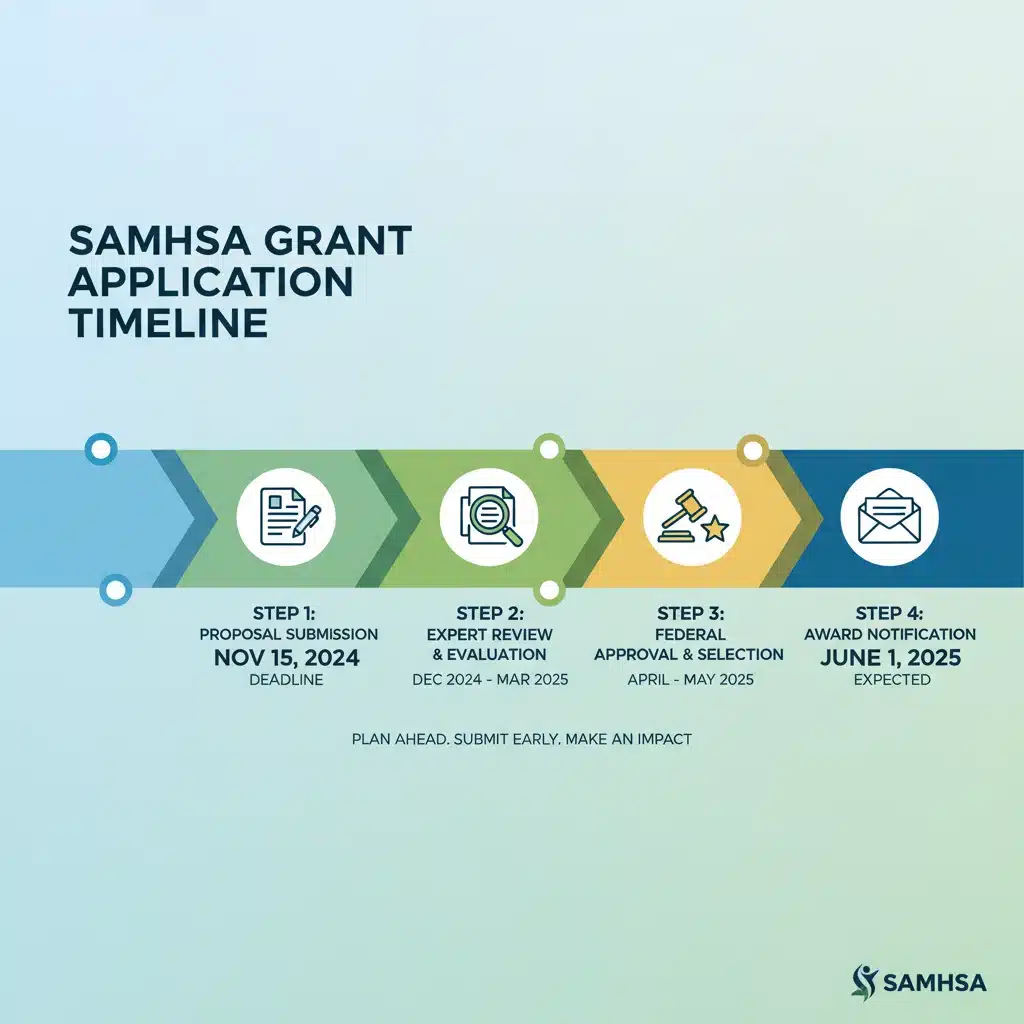
Once you’ve successfully submitted your application for the SAMHSA Recovery Grants, the waiting game begins. Here’s a general idea of what to expect:
- Initial Review: SAMHSA will conduct an initial review to ensure your application meets all eligibility requirements and submission guidelines. Applications that fail this initial screening may be rejected.
- Peer Review: Eligible applications are then sent to a panel of expert peer reviewers. These reviewers are typically professionals in the behavioral health field who evaluate applications based on the criteria outlined in the FOA. They score proposals on various aspects, including the quality of the project narrative, organizational capacity, evaluation plan, and budget.
- Program Officer Review: Following peer review, SAMHSA program officers will consider the peer review scores, program priorities, and available funding to make final funding recommendations.
- Notification: Successful applicants will receive an official Notice of Award (NoA) from SAMHSA. Unsuccessful applicants will also be notified and often receive feedback on their proposal, which can be invaluable for future applications.
The entire process from submission to award notification can take several months. It’s important to remain patient and monitor your email for any communications from SAMHSA or Grants.gov.
Maximizing Your Chances: Beyond the Application
Beyond the direct application for SAMHSA Recovery Grants, there are proactive steps your organization can take to enhance its overall competitiveness for federal funding:
- Build a Strong Track Record: Continuously demonstrate your organization’s effectiveness and impact through data collection, program evaluations, and success stories. A strong track record is your best resume.
- Network and Collaborate: Forge strong relationships with other community organizations, local government agencies, and behavioral health providers. Collaborative projects often score higher due to their broader reach and shared resources.
- Stay Informed: Regularly monitor SAMHSA’s website, Grants.gov, and relevant professional organizations for updates on funding opportunities, policy changes, and best practices in behavioral health.
- Invest in Grant Writing Expertise: If resources allow, consider hiring or consulting with experienced grant writers who specialize in federal grants. Their expertise can be invaluable in crafting a highly competitive proposal.
- Attend SAMHSA Webinars and Technical Assistance Sessions: SAMHSA often hosts webinars and provides technical assistance for specific funding opportunities. These sessions can offer critical insights and clarification directly from program officers.
The Impact of SAMHSA Recovery Grants
The funding provided through SAMHSA Recovery Grants has a profound and far-reaching impact on individuals, families, and communities across the nation. These grants enable organizations to:
- Provide Lifesaving Services: Funding supports a wide array of services, including peer support, recovery coaching, housing assistance, employment support, educational services, and family support, all critical for sustained recovery.
- Reduce Overdose Deaths: Many grants focus on prevention, treatment, and recovery from opioid and stimulant use disorders, directly contributing to efforts to combat the overdose crisis.
- Improve Mental Health Outcomes: By expanding access to mental health services and integrating them with physical health care, these grants help individuals manage mental health conditions and improve their overall quality of life.
- Strengthen Community Infrastructure: Grants often help build the capacity of local communities to respond to behavioral health needs, creating more resilient and supportive environments.
- Foster Innovation: SAMHSA encourages innovative approaches to recovery support, leading to the development and dissemination of new, effective models of care.
By successfully applying for and implementing programs funded by the 2026 SAMHSA Recovery Grants, your organization can become a vital part of this national effort, making a tangible difference in the lives of countless individuals seeking and sustaining recovery.
Final Thoughts: Seize the Opportunity
The 2026 SAMHSA Recovery Grants represent a significant opportunity for organizations committed to empowering individuals in recovery. While the application process can be rigorous, the potential to secure substantial funding to expand and enhance vital recovery support services makes the effort worthwhile. Remember, success hinges on meticulous preparation, a deep understanding of SAMHSA’s priorities, and a compelling narrative that showcases your organization’s capacity and the profound impact of your proposed project.
As the deadlines approach, start your preparations now. Gather your team, review your organizational strengths, identify critical community needs, and begin crafting a proposal that not only meets all requirements but also tells a powerful story of hope, healing, and transformation. Your dedication to recovery, coupled with a well-executed grant application, can unlock the resources needed to create lasting positive change in your community.
Stay tuned to SAMHSA’s official channels and Grants.gov for the release of the specific Funding Opportunity Announcement (FOA) for the 2026 SAMHSA Recovery Grants. Act swiftly and strategically, and you could be among the organizations making a monumental difference in the recovery landscape.