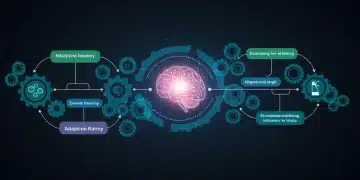
Building Emotional Fortitude: Navigating 2025’s Economic Uncertainties

Building emotional fortitude involves developing psychological strength to adapt and thrive amidst adversity, offering essential tools to navigate 2025’s economic uncertainties with resilience and maintain mental well-being.
As we look ahead to 2025, the prospect of economic uncertainties can evoke significant anxiety and stress, making it crucial to focus on building emotional fortitude. This article will explore seven proven strategies designed to equip you with the resilience needed to confront and navigate these challenges, fostering a sense of stability and well-being.
Understanding emotional fortitude in uncertain times
Emotional fortitude is more than just toughness; it’s the profound ability to adapt, recover, and even grow from stressful experiences. In an unpredictable economic landscape, this inner strength becomes an invaluable asset, allowing individuals to maintain their mental equilibrium and make sound decisions despite external pressures.
The global economic outlook for 2025 suggests continued volatility, with potential shifts in markets, employment, and personal finances. Cultivating emotional fortitude isn’t about ignoring these realities but rather about developing the internal resources to face them head-on without being overwhelmed. It involves a proactive approach to mental well-being, recognizing that our emotional state significantly impacts our ability to navigate complex situations effectively.
The psychological impact of economic instability
Economic instability can trigger a range of psychological responses, from mild anxiety to severe depression. The constant barrage of news, personal financial pressures, and job market fluctuations can erode one’s sense of security and control. This is why developing robust emotional resilience is not merely a desirable trait but a necessary survival skill in modern times.
- Increased stress and anxiety levels
- Feelings of helplessness or loss of control
- Impaired decision-making abilities
- Burnout and emotional exhaustion
In conclusion, understanding emotional fortitude as a dynamic process of adaptation and growth is fundamental. It’s about building a robust internal framework that can withstand the shocks of economic uncertainty, allowing individuals to emerge stronger and more capable of handling future challenges.
Strategy 1: Cultivating mindfulness and self-awareness
Mindfulness and self-awareness form the bedrock of emotional fortitude, offering a powerful pathway to understand and manage our internal responses to external stressors. By paying attention to our thoughts, feelings, and bodily sensations without judgment, we gain valuable insights into our psychological patterns and develop the capacity to respond rather than react.
In the face of economic uncertainties, it’s easy to get caught in a spiral of worry and fear. Mindfulness practices, such as meditation and focused breathing, can help anchor us in the present moment, reducing the mind’s tendency to catastrophize about the future. This practice is not about ignoring problems but about approaching them with a clear, calm mind, which is essential for effective problem-solving.
Practical mindfulness techniques
Integrating mindfulness into daily life doesn’t require hours of meditation. Even short, consistent practices can yield significant benefits. The key is regular engagement and a willingness to observe your inner landscape with curiosity.


- Daily meditation: Start with 5-10 minutes of guided meditation focusing on your breath.
- Mindful eating: Pay full attention to the taste, texture, and smell of your food.
- Body scan: Systematically bring awareness to different parts of your body, noticing any sensations.
- Self-reflection journaling: Regularly write down your thoughts and feelings to gain clarity and perspective.
Self-awareness, a natural byproduct of mindfulness, allows us to identify our emotional triggers and understand how they influence our behavior. This understanding is critical for developing coping mechanisms that are tailored to our individual needs, thereby strengthening our emotional fortitude. By being aware of our internal state, we can proactively address stress before it escalates, maintaining a greater sense of control and well-being.
Strategy 2: Building strong social support networks
Human beings are inherently social creatures, and the strength of our connections plays a vital role in our ability to withstand adversity. Building and nurturing strong social support networks is a powerful strategy for enhancing emotional fortitude, especially when navigating economic uncertainties. These networks provide emotional validation, practical assistance, and a sense of belonging that can buffer the impact of stress.
When financial worries loom, having a trusted circle of friends, family, or community members to lean on can make a significant difference. Sharing your concerns can alleviate feelings of isolation and provide new perspectives or solutions you might not have considered alone. It’s not just about receiving support; it’s also about giving it, which can foster a sense of purpose and connection.
The benefits of social connection
Research consistently shows that individuals with robust social ties tend to have better mental and physical health outcomes. This is particularly true during periods of stress, where social support acts as a protective factor against psychological distress.
- Emotional validation: Knowing your feelings are understood and accepted.
- Practical assistance: Help with tasks or resources during difficult times.
- Sense of belonging: Feeling connected to a community or group.
- Reduced isolation: Counteracting feelings of loneliness and despair.
Proactively reaching out and strengthening these bonds before a crisis hits is essential. This can involve scheduling regular check-ins with loved ones, joining community groups, or participating in shared hobbies. The effort invested in these relationships pays dividends in enhanced emotional resilience, providing a safety net when external circumstances become challenging. A robust support system is a cornerstone of enduring emotional fortitude.
Strategy 3: Practicing realistic optimism and reframing challenges
Realistic optimism is a powerful tool for building emotional fortitude, especially when confronted with economic uncertainties. It’s not about ignoring difficulties or pretending everything is fine; instead, it involves acknowledging challenges while maintaining a hopeful and proactive outlook. This approach allows individuals to see setbacks as temporary and specific, rather than pervasive and permanent, fostering a mindset conducive to problem-solving.
When facing financial stress, it’s easy for negative thoughts to consume us. Practicing realistic optimism encourages us to reframe these challenges as opportunities for growth or learning. For example, a job loss might be reframed as a chance to explore new career paths or develop new skills. This cognitive reframing helps to reduce emotional distress and promotes a more constructive response to adversity.
Techniques for cognitive reframing
Actively changing how you perceive situations can significantly impact your emotional well-being. These techniques require conscious effort but become more natural with practice.
- Identify negative thought patterns: Recognize when you are engaging in catastrophic thinking.
- Challenge assumptions: Question the validity of your negative thoughts with objective evidence.
- Seek alternative interpretations: Consider other possible explanations for a situation.
- Focus on what you can control: Direct your energy towards actionable steps rather than immutable circumstances.
By consciously choosing to adopt a more optimistic yet realistic perspective, individuals can cultivate greater emotional fortitude. This enables them to navigate economic downturns with a sense of agency, believing in their capacity to find solutions and adapt. Reframing challenges transforms them from insurmountable obstacles into manageable hurdles, reinforcing one’s ability to cope effectively.
Strategy 4: Developing adaptable financial planning
In an environment marked by economic uncertainty, fixed financial plans can quickly become obsolete. Developing adaptable financial planning is a crucial strategy for building emotional fortitude, as it provides a sense of control and preparedness. This approach emphasizes flexibility, contingency planning, and the ability to pivot strategies in response to changing economic conditions, thereby reducing financial anxiety.
Rather than adhering rigidly to a single financial blueprint, adaptable planning involves creating multiple scenarios and backup plans. This might include building a robust emergency fund, diversifying investments, or having a clear understanding of essential versus discretionary spending. Knowing that you have options and safeguards in place can significantly alleviate the emotional burden associated with financial instability.
Key components of adaptable financial planning
An adaptable financial plan isn’t just about numbers; it’s about creating a framework that supports your emotional well-being by reducing stress and fostering confidence.
- Emergency fund: Aim for 6-12 months of living expenses in an easily accessible account.
- Diversified investments: Spread investments across various asset classes to mitigate risk.
- Budgeting flexibility: Create a budget that can be adjusted quickly based on income or expenses.
- Skill development: Invest in skills that enhance employability and earning potential.
Ultimately, adaptable financial planning empowers individuals to face economic challenges with greater confidence and reduced emotional strain. It shifts the focus from fear of the unknown to proactive preparation and strategic response, significantly bolstering one’s emotional fortitude. This proactive mindset is essential for maintaining stability and peace of mind amidst fluctuating economic landscapes.
Strategy 5: Prioritizing physical health and well-being
The intricate connection between physical and emotional health cannot be overstated, especially when striving to build emotional fortitude. Prioritizing physical well-being through adequate sleep, balanced nutrition, and regular exercise provides a robust foundation for managing stress and enhancing mental resilience. A healthy body is better equipped to handle the demands of economic uncertainty, both physically and emotionally.
When faced with significant stress, our bodies often go into a fight-or-flight response, releasing hormones like cortisol. Consistent physical activity can help to metabolize these stress hormones, reducing their detrimental effects on our mental state. Similarly, proper nutrition fuels brain function and mood regulation, while sufficient sleep allows the mind and body to repair and rejuvenate, making us more resilient to emotional challenges.
Pillars of physical well-being
Integrating these pillars into your daily routine can significantly boost your capacity to cope with stress and uncertainty, directly contributing to your emotional fortitude.
- Regular exercise: Aim for at least 30 minutes of moderate activity most days of the week.
- Balanced nutrition: Focus on whole foods, including fruits, vegetables, lean proteins, and healthy fats.
- Sufficient sleep: Prioritize 7-9 hours of quality sleep per night for optimal cognitive function and mood.
- Hydration: Drink plenty of water throughout the day to support bodily functions and energy levels.
By consciously prioritizing physical health, individuals can significantly bolster their emotional fortitude. This holistic approach ensures that the body and mind are working in harmony, creating a resilient system capable of navigating the complexities of economic uncertainty with greater ease and stability. Investing in physical well-being is an investment in long-term emotional strength.
Strategy 6: Cultivating a growth mindset
A growth mindset, characterized by the belief that abilities and intelligence can be developed through dedication and hard work, is a critical component for building emotional fortitude. When confronting economic uncertainties, viewing challenges as opportunities for learning and improvement, rather than insurmountable obstacles, empowers individuals to adapt and persevere. This perspective transforms setbacks into stepping stones for personal and professional evolution.
In a fluctuating economic climate, new skills may become necessary, or established career paths might change. A fixed mindset, which assumes abilities are static, can lead to feelings of helplessness and resignation. Conversely, a growth mindset encourages proactive learning, skill acquisition, and creative problem-solving, fostering a sense of agency and optimism even amidst adversity. This mental framework is essential for sustained resilience.
Embracing challenges for personal development
Adopting a growth mindset involves consciously altering how you perceive and react to difficulties. It’s about seeing every challenge as a chance to grow stronger and more capable.
- View failures as learning opportunities: Analyze what went wrong and how to improve.
- Embrace new challenges: Step outside your comfort zone to develop new skills.
- Seek feedback: Use constructive criticism to refine your approach and abilities.
- Persevere through difficulties: Understand that effort and persistence lead to mastery.
By actively cultivating a growth mindset, individuals can significantly enhance their emotional fortitude, enabling them to navigate economic uncertainties with resilience. This approach fosters a proactive and optimistic outlook, transforming potential threats into valuable experiences that contribute to long-term personal and professional development. It is a powerful tool for adapting to change and thriving in complex environments.
Strategy 7: Practicing gratitude and finding meaning
In times of economic uncertainty, it’s easy to focus on what’s lacking or what could go wrong. However, practicing gratitude and finding meaning in our lives can significantly enhance emotional fortitude. Gratitude shifts our perspective towards appreciation for what we have, fostering positive emotions and reducing stress. Finding meaning, whether through purpose-driven work, relationships, or personal values, provides a stabilizing force that transcends external circumstances.
Gratitude can act as an antidote to anxiety and fear, reminding us of the good things that persist despite challenges. This doesn’t mean ignoring problems, but rather balancing our perception by acknowledging positive aspects of life. Similarly, having a strong sense of purpose can provide motivation and direction, helping us maintain mental clarity and emotional stability when external conditions are turbulent.
Integrating gratitude and meaning into daily life
These practices are not abstract concepts but actionable steps that can be woven into your daily routine, contributing to a more resilient emotional state.
- Gratitude journaling: Regularly list things you are grateful for, no matter how small.
- Expressing appreciation: Verbally or in writing, thank those who support you.
- Volunteering: Contribute to a cause you care about to find purpose and connection.
- Reflect on values: Periodically assess if your actions align with your core values.
By consistently practicing gratitude and actively seeking meaning, individuals can cultivate a deeper sense of emotional fortitude. These strategies help to create an internal reservoir of positivity and purpose, enabling us to navigate economic uncertainties with greater resilience and a more profound sense of well-being. It’s about finding strength and light even in challenging times.
| Key Strategy | Brief Description |
|---|---|
| Mindfulness | Develop self-awareness and manage emotional responses to stress. |
| Social Support | Nurture connections for emotional validation and practical help. |
| Realistic Optimism | Reframe challenges as opportunities for growth; maintain hope. |
| Growth Mindset | Believe in developing abilities through dedication and effort. |
Frequently asked questions about emotional fortitude
Emotional fortitude is the ability to withstand and recover from emotional stress or adversity. For 2025, with potential economic uncertainties, it’s crucial because it enables individuals to maintain mental stability, make rational decisions, and adapt to changing circumstances without being overwhelmed by fear or anxiety.
Mindfulness helps by fostering self-awareness, allowing you to observe thoughts and emotions without judgment. This practice reduces reactivity to stress, improves focus, and enhances your ability to stay grounded in the present, which are all vital for developing robust emotional resilience.
Strong social networks provide crucial emotional support, practical advice, and a sense of belonging. During economic downturns, these connections can buffer the psychological impact of stress, offering validation, shared experiences, and resources that help individuals feel less isolated and more capable of coping.
Yes, an emergency fund is a key component of adaptable financial planning, which directly contributes to emotional fortitude. Financial security reduces anxiety about unforeseen expenses or income loss, providing a sense of control and peace of mind that strengthens emotional resilience against economic shocks.
A growth mindset helps by reframing challenges as opportunities for learning and development. Instead of feeling defeated by uncertainty, individuals with a growth mindset are more likely to seek new skills, adapt strategies, and persevere, fostering a proactive and resilient approach to economic fluctuations.
Conclusion
In an increasingly unpredictable world, particularly with the economic shifts anticipated in 2025, cultivating emotional fortitude is not merely a beneficial practice but an essential one for maintaining mental well-being and stability. By embracing strategies such as mindfulness, strong social connections, realistic optimism, adaptable financial planning, physical health, a growth mindset, and gratitude, individuals can build a robust inner core capable of navigating any storm. These practical solutions offer a roadmap to not only survive but thrive amidst uncertainty, transforming challenges into opportunities for profound personal growth and lasting resilience.